Page 1 of 2
scordatura
Posted: 03 Sep 2026, 00:17
by dircknagy
Hello all
How should scordatura be indicated? (both instrumental parts and orchestral score)
Using an ambitus, or text such as "G to A"?
The notes themselves would all be sounding pitch, not alternate.
thanks!
dirck
Re: scordatura
Posted: 03 Sep 2026, 05:46
by Magnus Johansson
Hello! If it is only one string it is often enough with "Tune the G string to A" or something similar, and if it is more complex a small stave with notes showing the tuning might be more appropriate. Here is what the scordatura annotation looks like in Gustav Mahler's Symphony Nr. 4:

- Screenshot_20260903_141730.png (35.15 KiB) Viewed 111 times
Re: scordatura
Posted: 03 Sep 2026, 12:29
by dircknagy
Magnus Johansson wrote: 03 Sep 2026, 05:46
Hello! If it is only one string it is enough with "Tune the G string to A" or something similar, and if it is more complex a small stave with notes showing the tuning might be more appropriate.
Thanks Magnus
So, in the conductor's score, put "G to A" above the staff like the harp pedaling here?:
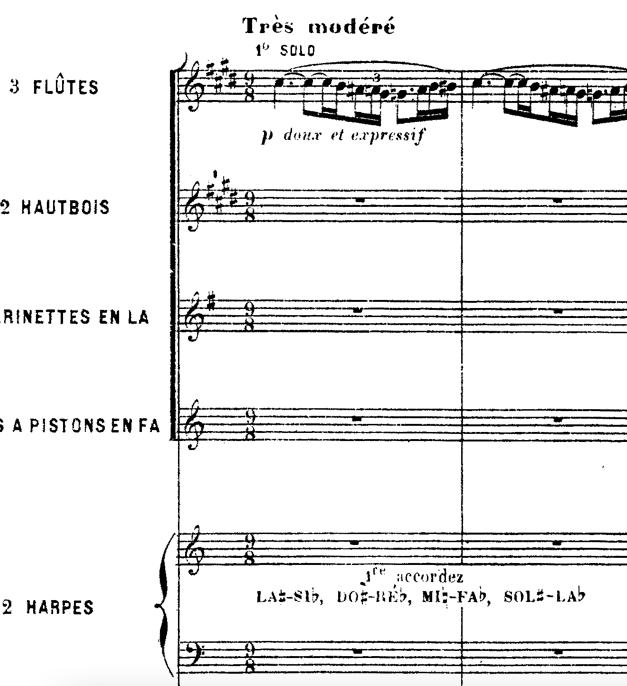
- Screen Shot 2026-09-03 at 7.11.52 AM.png (137.35 KiB) Viewed 110 times
I might just use an ambitus anyway to keep things tidy, even though this means there will be dead space on all the other instrument staves.
dirck
Re: scordatura
Posted: 03 Sep 2026, 12:31
by dircknagy
Sorry i missed the Mahler example; did you just add the image?
I didnt see it when i replied just now.
Thanks!
dirck
Re: scordatura
Posted: 03 Sep 2026, 12:45
by dircknagy
With Tympani, sometimes the score has the tunings indicated in the instrument name (eg, "3 Pauken, C.G.Es") Is an ambitus ever used instead? Or directions above the staff?
Also, what about the bass extension? Indicate it in the score, or assume that orchestral players will have them?
dirck
Re: scordatura
Posted: 03 Sep 2026, 23:11
by Mr_Incognito
It is a very unstandardized territory. Writing out the tuning of open strings is an elegant solution, but requires explanation later on whether the notation shows an actual pitch, or the position where the note would be in regular tuning with usual fingering.
Ysaye had a different solution:
Re: scordatura
Posted: 04 Sep 2026, 05:40
by Magnus Johansson
dircknagy wrote: 03 Sep 2026, 12:45
With Tympani, sometimes the score has the tunings indicated in the instrument name (eg, "3 Pauken, C.G.Es") Is an ambitus ever used instead? Or directions above the staff?
Also, what about the bass extension? Indicate it in the score, or assume that orchestral players will have them?
dirck
With "ambitus", do you mean a small stave with notes like in the Mahler example?
With "bass extension", do you mean making the fourth string on contrabasses reach down to C1?
Re: scordatura
Posted: 04 Sep 2026, 05:45
by Magnus Johansson
Mr_Incognito wrote: 03 Sep 2026, 23:11
It is a very unstandardized territory. Writing out the tuning of open strings is an elegant solution, but requires explanation later on whether the notation shows an actual pitch, or the position where the note would be in regular tuning with usual fingering.
I believe I have never seen "sounding scordatura notation" meaning that the notes show the sounding pitch; instead the notation has shown transposed notes so the grips are maintained just like real transposing instruments are handled.
Re: scordatura
Posted: 04 Sep 2026, 11:55
by dircknagy
Magnus Johansson wrote: 04 Sep 2026, 05:40
With "bass extension", do you mean making the fourth string on contrabasses reach down to C1?
.
yes
.
Magnus Johansson wrote: 04 Sep 2026, 05:40
With "ambitus", do you mean a small stave with notes like in the Mahler example?
.
No, more like this example from Schott:
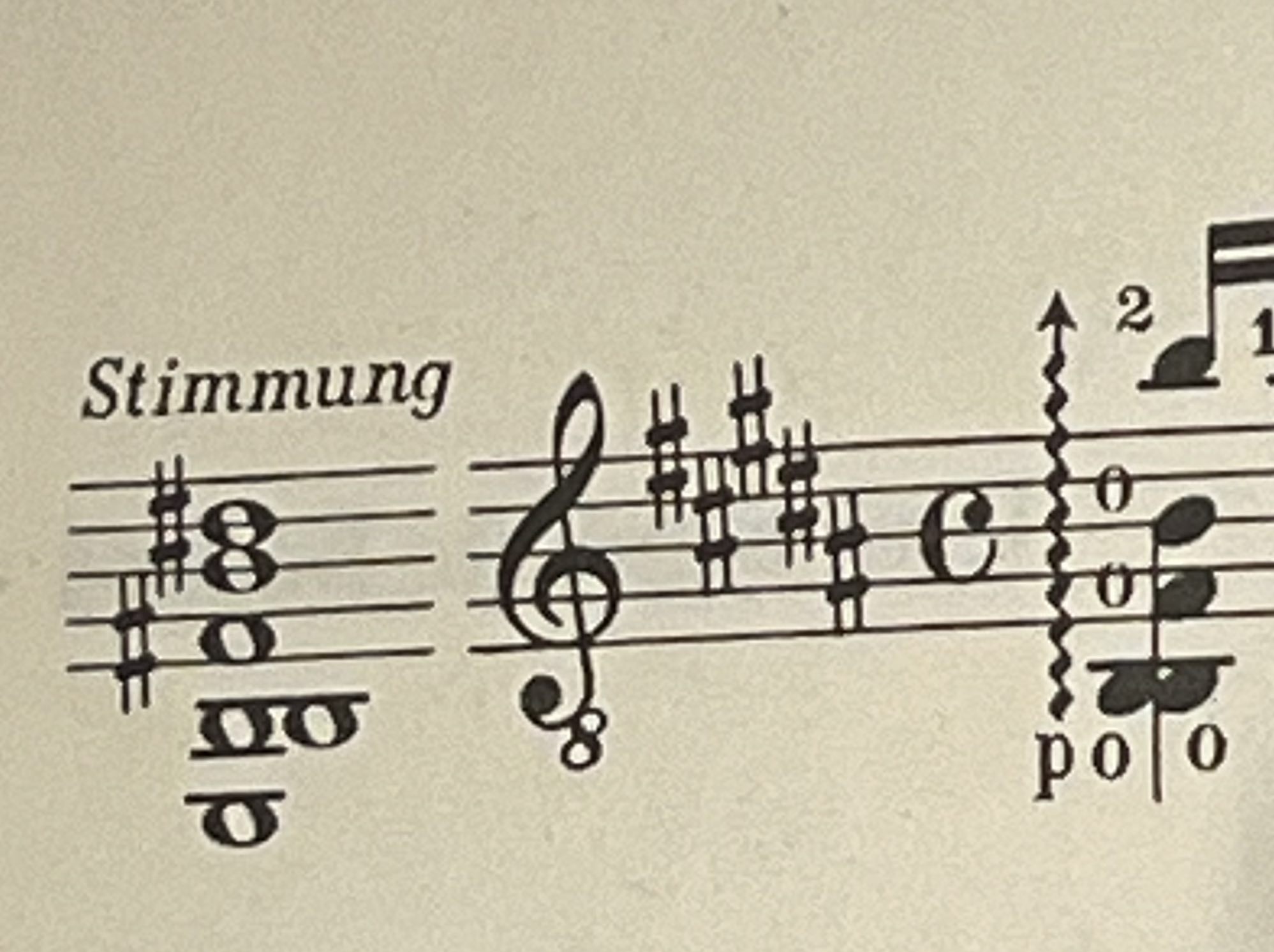
- Ragossnig.jpg (234.65 KiB) Viewed 60 times
Re: scordatura
Posted: 04 Sep 2026, 12:05
by dircknagy
Magnus Johansson wrote: 04 Sep 2026, 05:45
Mr_Incognito wrote: 03 Sep 2026, 23:11
It is a very unstandardized territory. Writing out the tuning of open strings is an elegant solution, but requires explanation later on whether the notation shows an actual pitch, or the position where the note would be in regular tuning with usual fingering.
I believe I have never seen "sounding scordatura notation" meaning that the notes show the sounding pitch; instead the notation has shown transposed notes so the grips are maintained just like real transposing instruments are handled.
Interesting.
I am not a skilled enough Violin player to have ever played a piece using scordatura, but with Guitar, the notes are almost always sounding pitch, and are indicated with string numbers:

- Llobet.jpg (409.48 KiB) Viewed 58 times
...
But sometimes if the tuning is really unusual, the notes will show what is expected from the fingering, not the actual sound. Every time I have seen this, an explanatory message at the beginning has been given.
Sometimes, the actual pitch is also given, as an ossia :
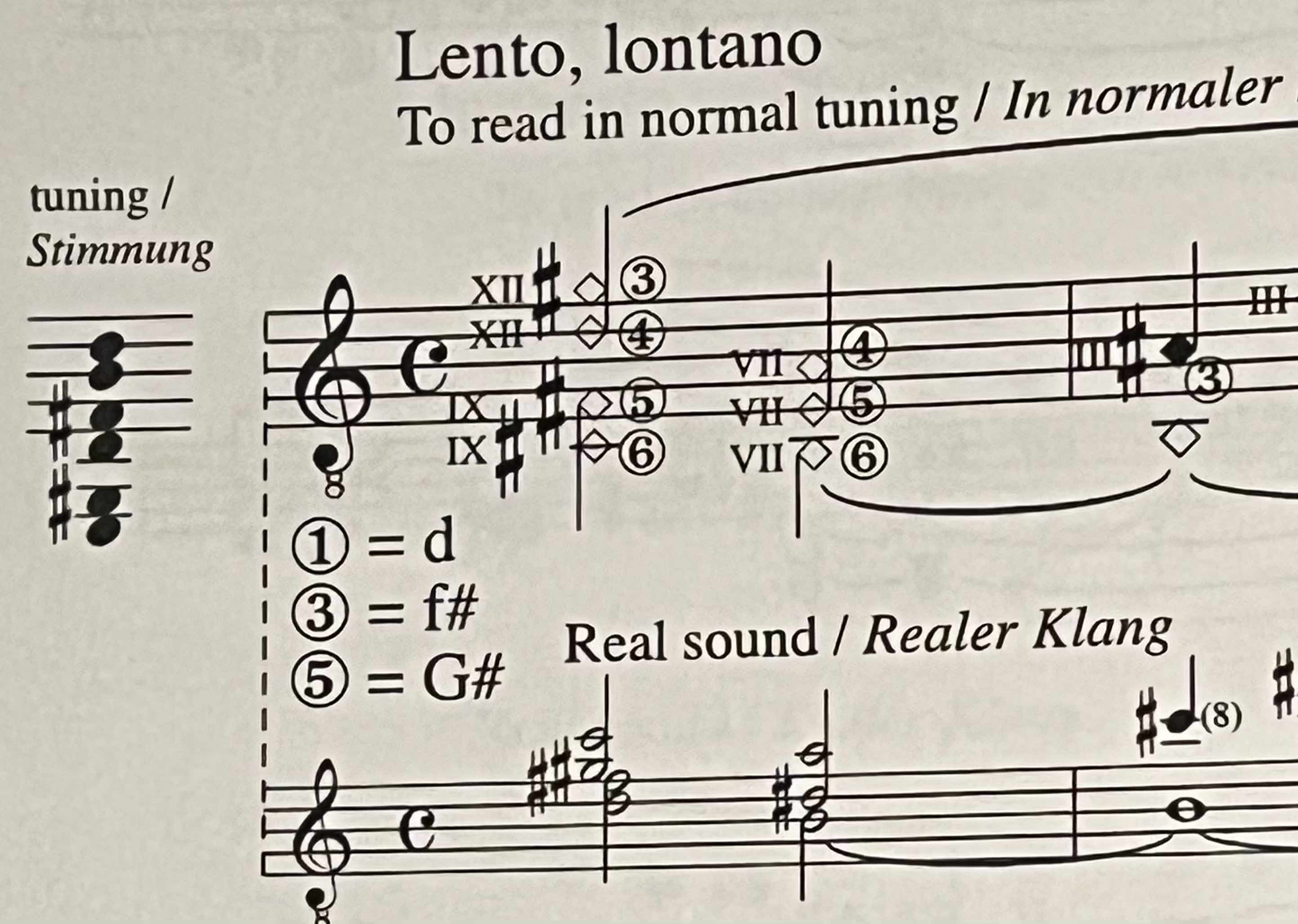
- Hoppstock.jpg (291.35 KiB) Viewed 58 times